Open Banking Is Finally Here: What It Means for Your Financial Life
For years, your financial data has been locked inside the institutions that hold it. Your bank knows your spending habits, your transaction history, and your account balances, but getting that information out and into the tools you actually want to use? That's been anything from clunky to downright impossible. Open banking changes all of that, and after years of regulatory groundwork, it's finally becoming a reality in the United States.
Here's what's happening, why it matters, and how it's about to reshape the way you manage your money.
What Is Open Banking, Exactly?
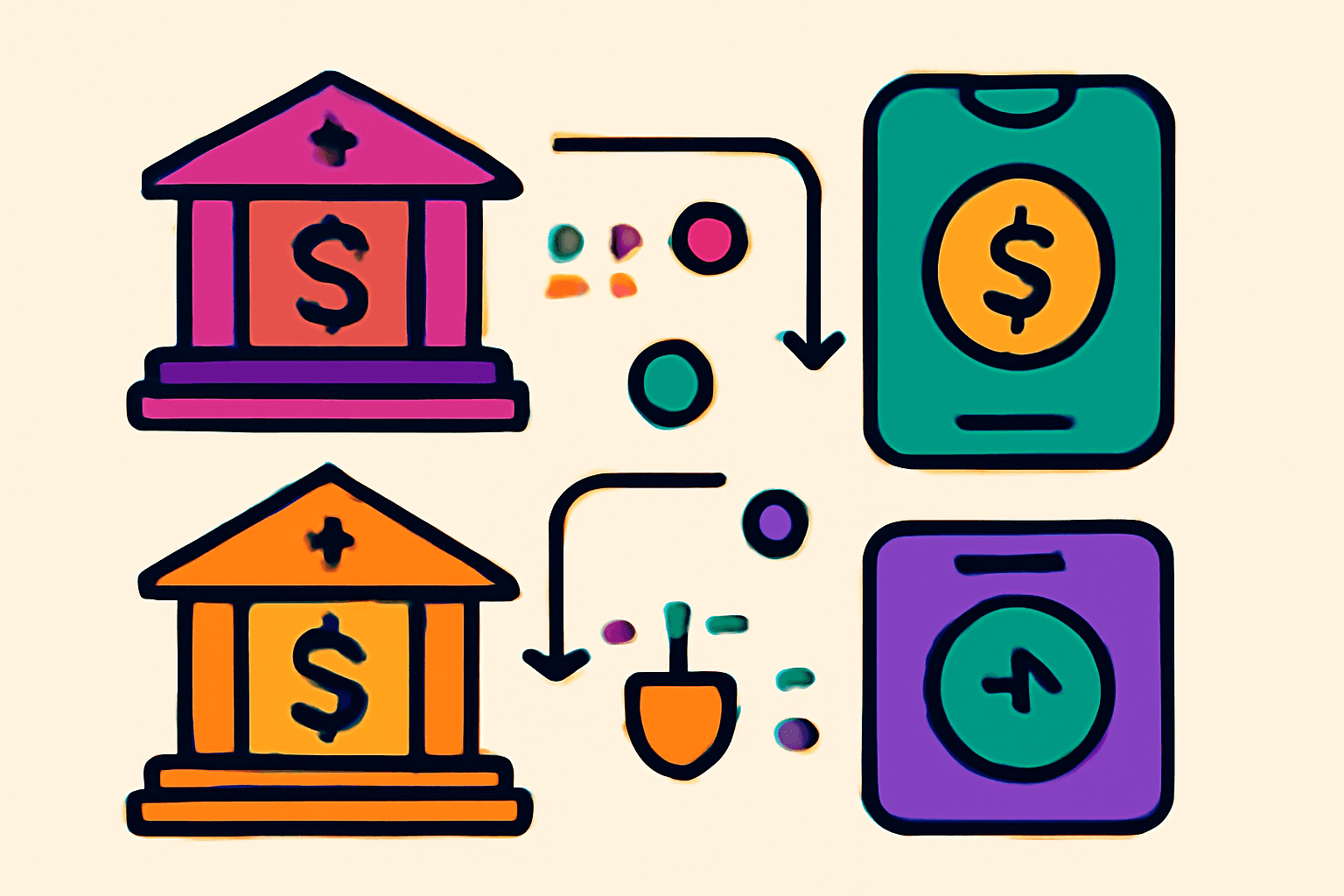
At its core, open banking is a system that lets you share your financial data with third-party apps and services securely and on your terms. Instead of your bank being the sole gatekeeper of your information, you get to decide who can access it, what they can see, and for how long.
This works through APIs (Application Programming Interfaces), which are standardized, secure connections that let different software systems talk to each other. Think of it like giving a budgeting app a secure, read-only window into your bank account, rather than handing over your login credentials and hoping for the best.
The key word here is consumer control. Open banking doesn't mean your data is open to everyone. It means it's open to the services you choose, with your explicit permission.
The CFPB's Section 1033 Rule: The U.S. Gets Serious
The legal foundation for open banking in the United States is Section 1033 of the Dodd-Frank Act, which the Consumer Financial Protection Bureau (CFPB) finalized rules around in late 2024. The rule is now being implemented in phases, with the largest banks required to comply first.
Here's what Section 1033 requires:
- Banks must make your data available in a standardized, machine-readable format when you request it.
- Third-party apps that you authorize can access your transaction history, account balances, and other financial data through secure APIs.
- You can revoke access at any time, and companies must honor that revocation promptly.
- Data holders cannot charge fees for providing access to your own information.
This is a fundamental shift. For the first time, federal rules explicitly state that your financial data belongs to you, not your bank. And banks are required to facilitate sharing it, not just allow it grudgingly.
The Death of Screen Scraping
If you've ever connected a budgeting app like Mint or YNAB to your bank account, you've probably used screen scraping without realizing it. Here's how it works: you give the app your bank username and password, and a third-party service (like Plaid) logs into your bank account on your behalf, "scrapes" the data from the screen, and feeds it into the app.
It works, mostly. But it's a terrible system for several reasons:
- Security risk: You're sharing your actual bank credentials with a third party. If that intermediary gets breached, attackers have your login information.
- Fragile connections: Screen scraping breaks every time a bank updates its website layout. That's why your budgeting app loses its bank connection so often.
- No consumer control: Once you hand over your credentials, you have limited visibility into what data is being accessed and when.
Open banking replaces this with token-based API access. You authenticate directly with your bank, grant specific permissions, and receive a secure token, not your password, that the third-party app uses to access only the data you approved. It's faster, more reliable, and significantly more secure.
Practical Benefits You'll Actually Feel
Open banking sounds like a regulatory policy, but its effects are deeply practical. Here's how it's likely to change your day-to-day financial life:
Easier Account Switching
Ever wanted to switch banks but dreaded the hassle of updating every direct deposit and automatic payment? Open banking makes account portability dramatically easier. New services can pull your transaction history from your old bank, identify your recurring payments, and help you migrate them in minutes rather than weeks.
This also puts competitive pressure on banks. When customers can leave easily, institutions have to work harder on rates, fees, and service quality to keep them.
Better Loan Rates and Faster Approvals
When you apply for a loan today, lenders often rely on your credit score and whatever documents you upload. With open banking, you can authorize a lender to see your actual cash flow data directly, including your income patterns, spending habits, and savings behavior. This gives lenders a richer picture of your financial health, which can translate into:
- Faster approvals with less paperwork
- Better interest rates for borrowers whose real financial picture is stronger than their credit score suggests
- Access to credit for people who are "credit invisible" but have solid banking histories
Unified Financial Dashboards
Imagine one app that shows your checking account, savings, credit cards, investment accounts, and loans all in one place, updated in real time, without you having to re-enter passwords every few weeks. Open banking makes this possible through reliable, persistent API connections that don't break when your bank tweaks its website.
This is already the norm in countries where open banking launched earlier, and it's coming to the U.S. market rapidly.
Smarter Savings and Investment Tools
Fintech apps can use your real transaction data (with your permission) to offer personalized recommendations: flagging subscriptions you forgot about, suggesting optimal savings transfers based on your cash flow, or automatically rebalancing investments when your income changes. The data access that open banking enables makes these tools far more accurate and useful.
Privacy and Security: How You're Protected
Understandably, the idea of sharing financial data raises concerns. Here's how open banking addresses them:
- You control the permissions. You decide exactly which data each app can access, whether that's just account balances or full transaction history. You can grant and revoke access anytime.
- No password sharing. Unlike screen scraping, open banking uses tokenized authentication. Third parties never see your bank login credentials.
- Regulatory oversight. Third-party data recipients must comply with federal data protection requirements. The CFPB's rules include provisions for data minimization (companies can only collect what they need) and usage limitations (they can only use your data for the purpose you authorized).
- Liability protections. If something goes wrong due to unauthorized data access, the regulatory framework establishes clear accountability.
No system is perfectly secure, but open banking is a massive improvement over the screen-scraping status quo. You're trading an informal, credential-sharing arrangement for a regulated, permission-based framework with legal protections.
How Other Countries Paved the Way
The U.S. isn't inventing open banking from scratch. Other countries have been living with it for years, and their experiences offer a useful preview.
The United Kingdom launched its open banking framework in 2018 under the Competition and Markets Authority. As of 2025, over 7 million UK consumers and businesses use open banking-enabled products. Account aggregation apps, streamlined lending, and automated accounting tools have become mainstream. The UK experience demonstrated that once the infrastructure exists, innovation follows quickly.
The European Union implemented open banking through PSD2 (Payment Services Directive 2), which went into effect in 2018 and required all EU banks to provide API access. The EU is now working on PSD3, which will expand the framework to cover areas like open finance (investment and insurance data, not just banking).
Australia took a broader approach with its Consumer Data Right, which applies not just to banking but also to energy and telecommunications. The principle is the same: your data, your choice.
The common thread across all of these is that competition increased, consumer products improved, and the predicted security catastrophes did not materialize. That's encouraging for the U.S. rollout.
What to Expect Next
Open banking in the U.S. is rolling out in phases. The largest banks, those with over $500 billion in assets, face compliance deadlines first, with smaller institutions following over the next several years. Here's what the near-term timeline looks like:
- 2026: Major banks begin offering standardized API access. Expect the first wave of consumer-facing apps built on this infrastructure.
- 2027-2028: Mid-size banks and credit unions come online. The ecosystem of open banking-powered tools grows significantly.
- Beyond 2028: The conversation shifts toward open finance, extending data portability beyond banking to investments, insurance, and pensions.
There will be friction along the way. Some banks will comply reluctantly, offering minimum viable APIs that technically meet the rules but aren't genuinely useful. Regulators and market competition will need to push for meaningful implementation. But the direction is clear: your financial data is becoming portable, and the products built on that portability are going to get very good.
The Bottom Line
Open banking is the most significant structural change to consumer finance in the U.S. in years. By putting you in control of your financial data and replacing insecure screen scraping with regulated API access, it opens the door to better tools, more competition, and a financial system that actually works for consumers.
Your action step: Start paying attention to which apps and services you've connected to your bank accounts. As open banking rolls out, you'll have the opportunity to replace those old, credential-based connections with secure, permission-based ones. When your bank offers API-based access, switch to it, and explore the new generation of financial tools built on open banking infrastructure. Your data is finally yours. Use it wisely.