The True Cost of Lifestyle Inflation (and How to Avoid It)
You got the raise. Congratulations — you earned it. But here's the question nobody asks at the celebration dinner: what happens to that extra money six months from now?
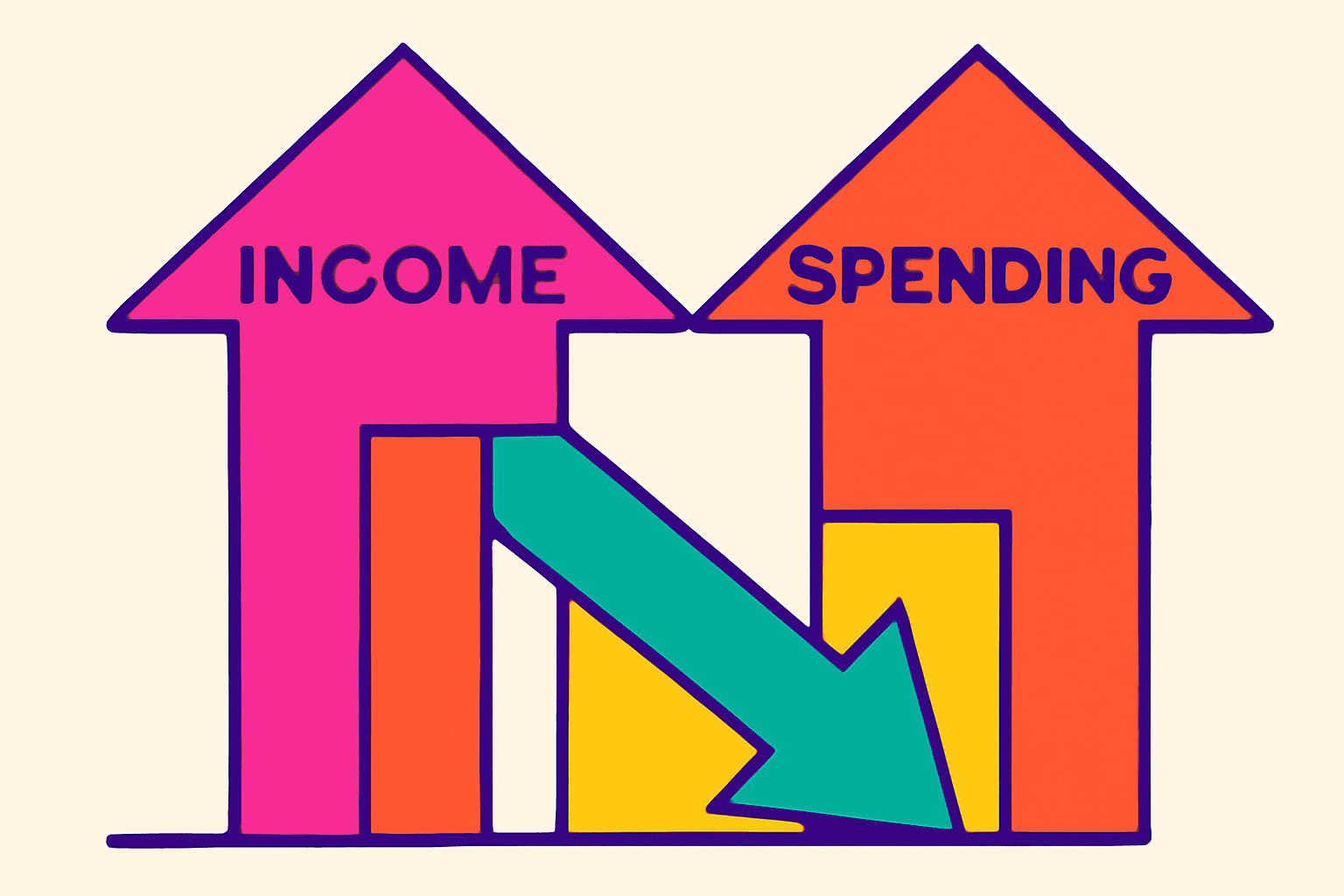
For most people, the answer is uncomfortable. It disappears. Not into savings, not into investments, but into a slightly nicer apartment, a newer car, more frequent dining out, and upgraded subscriptions they barely notice. This is lifestyle inflation — the tendency to increase spending as income rises — and it's one of the biggest silent threats to long-term wealth.
What Lifestyle Inflation Actually Looks Like
Lifestyle inflation isn't about making one reckless purchase. It's a gradual drift. Each individual upgrade seems reasonable, even justified. You work hard, so why not enjoy it?
Here's how it typically plays out:
- You get a $10,000 raise and move to an apartment that costs $400 more per month.
- You upgrade your car lease, adding $150/month to your payment.
- You start eating out an extra two or three times a week — another $200/month.
- You pick up a few new subscriptions and memberships: $75/month.
Just like that, $825 per month of your raise is spoken for. That's $9,900 per year out of a $10,000 raise. Your savings rate? Virtually unchanged. Your lifestyle? Only marginally better. Your wealth-building potential? Gutted.
The Opportunity Cost Nobody Talks About
The real damage of lifestyle inflation isn't the money you spend — it's the money you never grow. Let's run the math on that same $10,000 raise.
Scenario A: You inflate your lifestyle. You absorb the entire raise into spending. Your net worth trajectory stays flat. After 20 years, you have roughly the same savings rate you had before every raise you ever received.
Scenario B: You invest half the raise. You put $5,000 per year (about $417/month) into a diversified index fund averaging 8% annual returns. After 20 years, that single raise has turned into approximately $247,000. After 30 years, it's over $611,000.
That's from one raise. Now imagine applying this approach to every raise, bonus, and promotion across a career. The gap between Scenario A and Scenario B isn't just large — it's the difference between retiring comfortably at 55 and scrambling at 67.
Why We're Wired for Lifestyle Inflation
Before you feel bad about it, understand this: lifestyle inflation is deeply human. Several forces push us toward it.
Hedonic Adaptation
Psychologists call it the hedonic treadmill. That new car feels amazing for about three months. Then it's just your car. The nicer apartment thrills you until it becomes the baseline. Every upgrade resets your expectations, pushing you to chase the next one.
Social Comparison
When your peers earn more, they spend more — and you notice. A colleague buys a house, a friend takes a luxury vacation, your neighbor drives a new SUV. These cues subtly shift your sense of what's "normal" spending for someone at your income level.
The "I Deserve It" Trap
This is the most dangerous one. You worked 60-hour weeks for that promotion. Of course you deserve something nice. The problem isn't the logic — it's that this reasoning applies to every raise forever, creating a ratchet that only moves spending upward.
The 50% Rule for Raises
Here's a simple, powerful framework: commit to saving at least 50% of every raise before you receive it.
When you learn you're getting a $6,000 raise, immediately set up an automatic transfer so that $3,000 per year ($250/month) goes straight to savings or investments. You never see it, you never miss it, and you still get to enjoy a meaningful lifestyle upgrade with the other half.
This approach works because:
- You still feel the reward. You're not depriving yourself — you're spending more than before.
- Your savings rate actually improves. With each raise, a larger percentage of your total income goes toward building wealth.
- It's automatic. No willpower required after the initial setup.
- It compounds. Apply this to five raises over a decade, and you've built a serious investment engine without ever feeling like you sacrificed.
Some people go further — saving 75% or even 100% of raises. If your current lifestyle is already comfortable, there's no rule that says more income must mean more spending.
5 Strategies to Beat Lifestyle Inflation
Beyond the 50% rule, here are concrete tactics that work.
1. Automate Before You Adjust
The moment a raise hits, increase your 401(k) contribution, boost your automatic investment transfers, or raise your direct deposit split to savings. Do this within 48 hours — before the extra cash normalizes in your checking account.
2. Keep Your Fixed Costs Fixed
The most damaging lifestyle inflation happens in recurring expenses: rent, car payments, subscriptions, memberships. A one-time splurge on a nice dinner costs $150. A housing upgrade costs $4,800 per year, every year, with no end date. Be especially skeptical of any lifestyle change that creates a new monthly bill.
3. Build a "Raise Budget"
When you get a raise, sit down and deliberately allocate it before spending any of it. Write it out:
- 50% to investments or debt payoff
- 20% to a specific savings goal (vacation fund, home down payment)
- 30% to genuine lifestyle improvements you've been wanting
This turns an unconscious drift into a conscious decision. You'll spend on things that actually matter to you, not on whatever happens to catch your eye.
4. Track Your Savings Rate, Not Just Your Budget
Most people track expenses. Fewer track their savings rate — the percentage of gross income that goes toward building wealth. This is the single most important number in personal finance.
If you earned $60,000 and saved 15%, then got a raise to $70,000, your savings rate should stay at 15% or go up. If it drops to 10%, lifestyle inflation is winning, even if your budget looks fine on paper.
5. Use the 72-Hour Rule for New Recurring Expenses
Before committing to any new monthly cost — a gym upgrade, a streaming bundle, a meal kit service — wait 72 hours. Ask yourself: "Would I rather have this, or invest the equivalent ($50/month = roughly $100,000 over 30 years at 8% returns)?" Sometimes the answer is yes, and that's fine. But at least you're making the trade-off consciously.
What About Enjoying Your Money?
Let's be clear: the goal is not to live like a monk. Money is a tool, and part of its purpose is to fund a life you enjoy. The problem isn't spending — it's unconscious spending that grows automatically with every income increase.
The happiest high earners I've seen do two things well:
- They spend aggressively on what they truly value — travel, hobbies, experiences, quality time with family.
- They spend almost nothing on status signals they don't care about — keeping the reliable car instead of leasing a luxury one, staying in the neighborhood they love instead of "upgrading" to impress.
The key is intentionality. Every dollar you spend on something you genuinely value is money well spent. Every dollar that drifts away through lifestyle inflation is a dollar that built nothing — no wealth, no memories, no satisfaction.
The Bottom Line
Lifestyle inflation is the reason many high earners retire with far less than they should. It's not a spending problem — it's an awareness problem. Your income is likely to grow substantially over your career. Whether that growth translates into wealth or just more expensive habits depends entirely on the systems you put in place today.
Your action step: Before your next raise arrives, set up one automatic transfer — to your 401(k), an index fund, or a high-yield savings account — that captures at least 50% of the increase. Make the decision once, and let compounding do the rest. Your future self will thank you for the restraint your present self barely notices.